Apollo II’s in COVID’s Vaccine Development
15/12/25
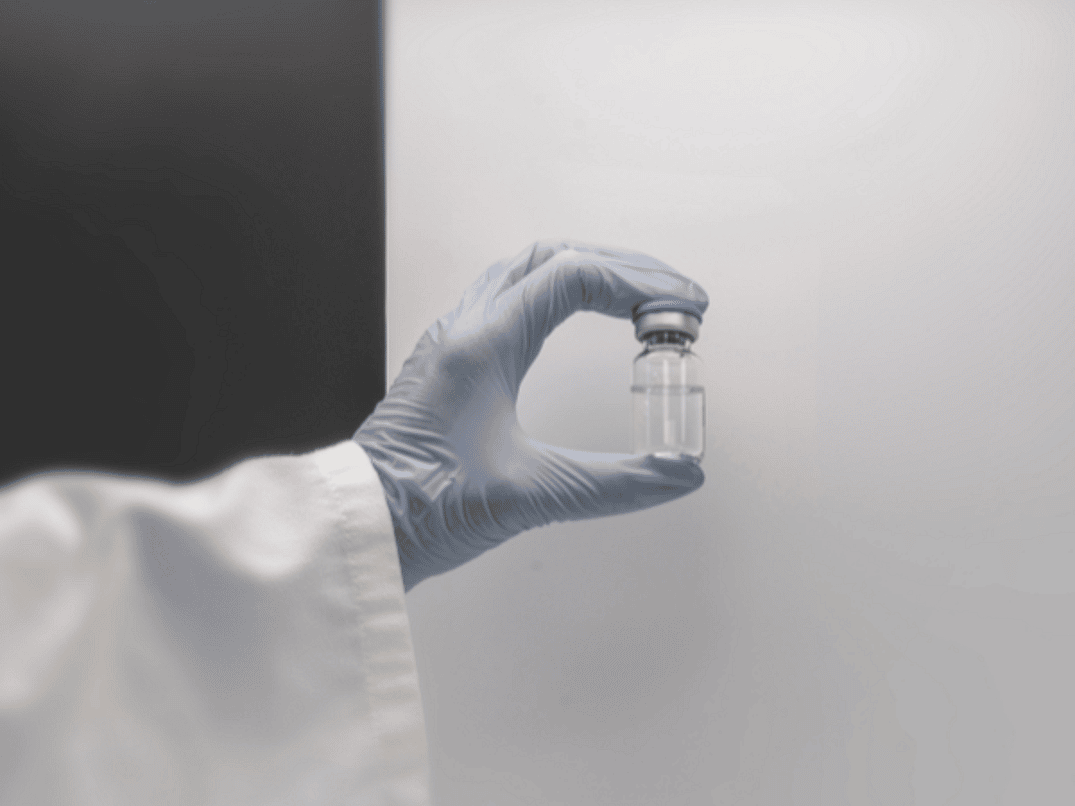
The race to develop a COVID‑19 vaccine involved not only scientific breakthroughs, but also practical inspection processes to ensure safety. At the University of Oxford, for example, eagle-eyed viewers of BBC News and Newsnight may have spotted researchers using Adelphi’s Apollo II liquid Inspection Units in their fill-finish activities, illustrating how manual inspection tools played a vital role in vaccine development.
What Are Apollo II Liquid Inspection Units?
The Apollo II is a compact manual viewer designed to meet European Pharmacopoeia Specification 2.9.20 and US Pharmacopoeia USP chapter 41 (1790), section 6.1 standards for visible particle detection:
- Equipped with high performance LED bulbs, it delivers 2,000-3,750 lux illumination - ideal for inspecting transparent liquids within transparent containers such as glass vials and ampoules
- The High‑Intensity model provides 8,000–10,000 lux - ideal for inspecting coloured glass containers, translucent plastic containers, and turbid or coloured preparations
- Designed for longevity (50,000 hours bulb life) - a typical product lifespan of 10+ years
- Inspected vials can be assessed under both matte black and non-glare white backgrounds.
These viewers provide reliable particle detection, making them popular in vaccine trials and development labs worldwide, including among companies like Pfizer, GSK, and Bayer.
Apollo II’s Role in Vaccine Workflow
Even in high-tech facilities, manual visual inspection remains a critical checkpoint. During COVID‑19 vaccine R&D:
- Clinical trial batches frequently relied on manual inspection stations to verify clarity, fill level, and detect visible particulates.
- These processes complement automated systems by helping develop and validate vision recipes for machine inspection protocols.
Manual liquid viewers ensure accurate, visual batch release in early‑stage vaccine production, especially during clinical phases. Manual inspection of samples by a person is still a required aspect of the production process, even when larger scale automatic inspection machines are used for the majority.
Why Visual Inspection is Crucial
Given the global urgency (nearly 11 billion vaccine doses required worldwide), several inspection steps became absolutely essential:
- Sterile borosilicate glass vials must be free of scratches, cracks, chips, or inclusions - defects that can expose vaccine to contamination or leak risks.
- Even subvisible particulates have been linked to quality recalls - for instance, a Moderna vaccine batch was recalled in 2021 due to stainless steel fragments from a misaligned machine part. That case underscores the high-stakes environment of visual QC.
Manual Vs Automated Inspection: Why They Both Matter
Quality assurance in vaccine production cannot rely on one method alone. A combined process offers:
- Manual inspection: Ideal for small-scale trial runs, visual reference, and human validation.
- Automated inspection: Necessary for high-speed production, regulatory compliance, and consistent defect detection.
Apollo II viewers remain a trusted manual inspection tool, offering simple implementation, compliance with pharmacopeia standards, and effective early-phase visual QC.
Key Takeaways
- Manual visual viewers like Apollo II remain essential for early-stage quality control and trial batch inspection.
- Automated vision systems are necessary for scaling up, offering high throughput and precise defect detection.
- Visual inspection is not optional - it is mandated under Pharmacopeia 2.9.20 and FDA/EMA GMP requirements for injectable products.