Machine Servicing & Maintenance
Regular machine servicing is one of the most effective ways to keep your production running smoothly.
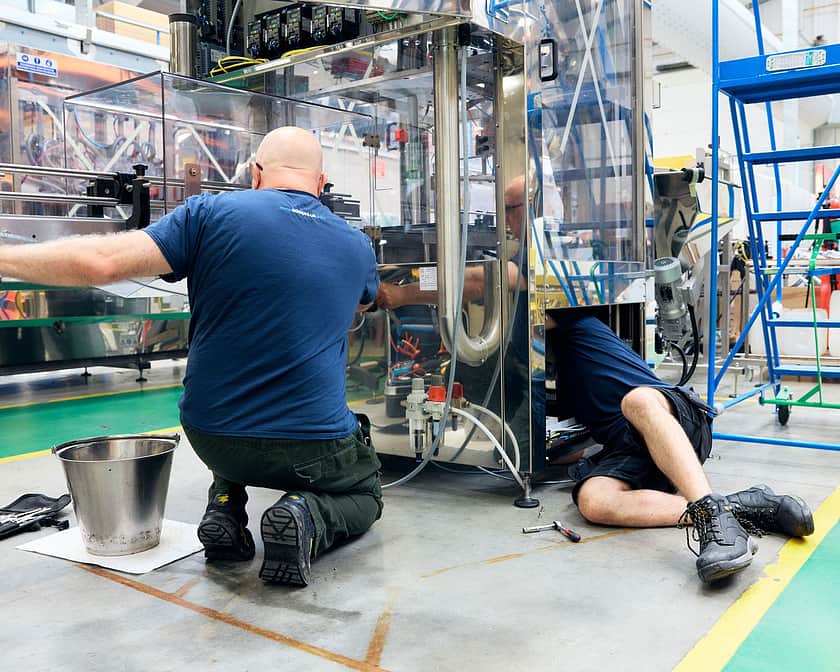
Professional Filling Machine Servicing
Regular servicing is one of the most effective ways to keep your production running smoothly. By identifying wear and potential faults early, issues can be resolved during planned maintenance rather than causing costly disruptions in the middle of a production run. Compared to the impact of an unexpected breakdown, preventative servicing is a small investment that protects efficiency, safety, and long‑term machine performance.
We provide reliable, cost‑effective servicing for all our filling and capping machinery worldwide. Many customers opt for scheduled annual servicing and in some regions, we coordinate group visits so travel costs can be shared, keeping your service cost‑efficient while ensuring your equipment receives specialist attention.
You can book servicing at any time, but we strongly recommend a full inspection at least once every 12 months to maintain optimal machine performance and extend equipment lifespan. For larger systems, a six‑month inspection can enhance the effectiveness of the annual full service.
Why Regular Servicing Matters
Even high‑quality machines will experience wear over time. Without routine service, faults can go unnoticed, operator safety can be compromised, and performance declines.
Some of our customers’ machines have been operating for more than 30 years, a lifespan made possible through consistent servicing and preventative care.
Regular servicing helps ensure:
- Operator safety and regulatory compliance
- Reduced risk of unplanned downtime
- Maintained accuracy, reliability, and throughput
- Longer equipment life and better return on investment
Book Your Service
What Is Machine Maintenance?
Machine maintenance involves keeping your filling equipment in the best possible condition through regular servicing, routine inspections, timely repairs, and replacement of worn components. This proactive approach ensures your equipment remains safe, reliable, and fully capable of supporting your production demands long term.
Preventative care is always more cost‑effective than emergency repairs. Selecting the right approach to maintenance ensures you get the best performance from your machinery.
Get Your Service Support
Types of Maintenance
Choose the maintenance approach that works best for your equipment. Select an option below to learn more.
-
Reactive Maintenance
While Adelphi can support emergency breakdowns, this is the most expensive and disruptive approach. Production stops completely until the issue is resolved, and engineers or spare parts may not always be immediately available. It also does not help extend machine lifespan.
-
Corrective Maintenance
Issues discovered during another task are repaired before they cause a breakdown.
This approach reduces future failures, saves money and supports operator safety, but still relies on problems being spotted early.
-
Preventive Maintenance
Scheduled inspections carried out before problems occur.
Replacing worn seals, O‑rings or mechanical parts during routine checks helps avoid major failures and long lead‑time shortages. This is the best method to maximise productivity and minimise downtime.
-
Routine Servicing
Regular cleaning, visual checks and operator‑led inspections.
These simple, consistent actions help you identify early signs of wear and maintain machine hygiene and performance.
How to Improve Machine Maintenance
If you are looking to strengthen your servicing schedule, Adelphi can support you with simple, effective steps:
- Annual servicing from the machine’s first year
- Keeping critical spare parts (O‑rings, seals, high-wear components) on site
- Regular strip‑downs and cleaning to anticipate wear early
- Planned inspections to avoid issues going unnoticed
- Operator training to ensure best practice handling
These actions keep your equipment running efficiently and significantly reduce the risk of avoidable breakdowns.