Ask the Expert: The Response Monobloc
18/12/25
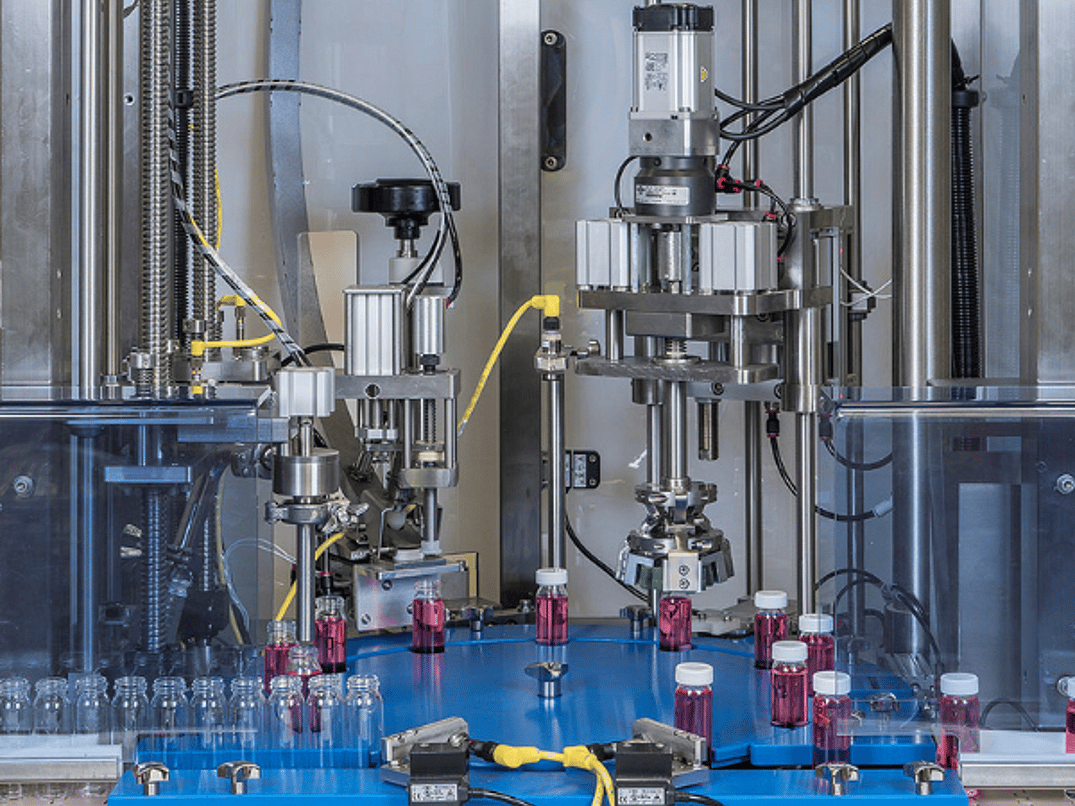
When it comes to filling and capping solutions, manufacturers often face challenges such as limited production space, maintaining product quality, and reducing downtime. We spoke to Dean Willis, Filling Expert and Sales Director at Adelphi Manufacturing, to explore how the Response Monobloc Filling and Capping Machine can help overcome these hurdles.
Challenge 1: Limited Space in Production Areas
Key Question: How can I maximise productivity in a small manufacturing space?
Dean’s Recommendation:
The Response Monobloc combines both filling and capping into one compact, space-saving unit – producing up to 4 times the volume in the same time frame, compared to manual methods.
Its footprint is designed for small-scale or expanding production environments, allowing you to achieve up to 35 containers per minute within a limited workspace. The machine handles fill volumes from 3ml to 1L, making it ideal for industries such as cosmetics, pharmaceuticals, food, and beverages.
By consolidating two processes into one machine, the Monobloc not only saves space but also reduces the need for additional equipment or operator expenditure.
Challenge 2: Maintaining Product Integrity with Vacuum Capping
Key Question: How can I ensure my products are securely sealed to avoid leaks and spoilage?
Dean’s Recommendation:
Leakage during transit - particularly in oil-based products - accounts for approximately 20–30% of product damage cases, leading to increased returns, customer dissatisfaction, and wasted inventory.
The optional vacuum capping feature on the Response Monobloc is perfect for leak-prone or sensitive products. Vacuum capping removes air before sealing, helping preserve product quality, extend shelf life, and reduce transit leakage.
This feature is particularly useful for industries where product integrity is critical, such as pharmaceuticals and premium food products.
“The vacuum application is working brilliantly, and there have been dramatically fewer – I can’t really think of any – complaints about leakages.”
Challenge 3: Reducing Downtime During Cleaning and Changeovers
Key Question: How can I minimise production delays caused by cleaning and part changes?
Dean’s Recommendation:
Downtime and strip/cleaning inefficiency can cost 15–25% of potential production capacity each week.
The Monobloc’s quick-strip design allows for fast, tool-free disassembly, enabling rapid cleaning and product changeovers. Its intuitive HMI touchscreen controls simplify operation and reduce training requirements, ensuring your team can easily switch between different container sizes and products while maintaining efficiency.
Challenge 4: Reducing Waste and Supporting Sustainability
Key Question: How does the Monobloc help reduce waste and support eco-friendly production?
Dean’s Recommendation:
Improving filling accuracy can reduce product giveaway by up to 2-5% per batch, directly increasing yield.
With a filling accuracy of ±0.25%, the Response Monobloc significantly reduces product waste, saving on raw materials and lowering operational costs (including cost per fill). Less waste also means a reduced environmental footprint, aligning with sustainable manufacturing practices.
If a 10,000-unit batch of 250ml bottles is consistently overfilled by just 1% (2.5ml per bottle), that's 25L of product wasted per batch. Over a year, with 100 batches, this equals 2,500L of lost product - costing thousands and harming sustainability metrics.
Why Choose the Adelphi Response Monobloc?
- Compact design for small production spaces
- Filling and capping in one machine for streamlined workflows
- Vacuum capping option for leak-free, shelf-stable products
- Easy-to-clean quick-strip design for reduced downtime
Exceptional filling accuracy (±0.25%) to minimise waste